2026-08-30T17:55:05.360Z ·
How to prevent frozen pipes in a Triangle winter
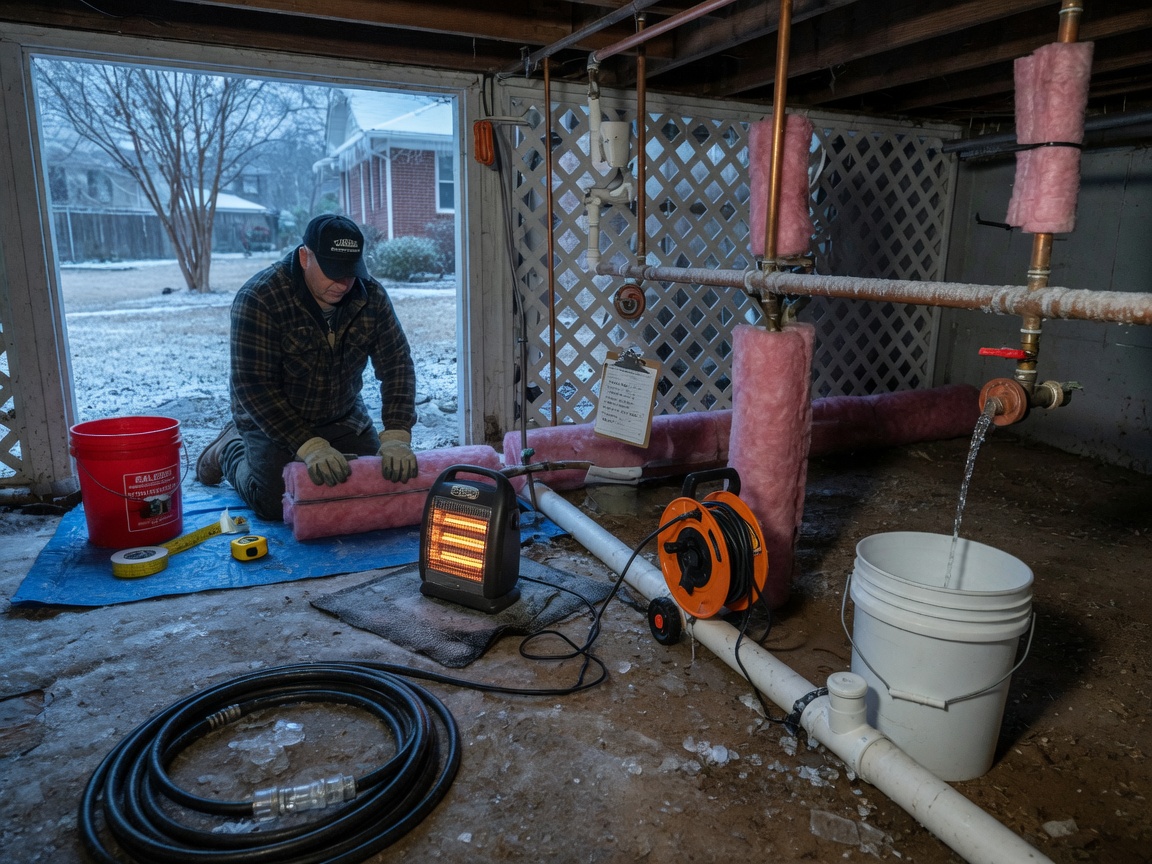
To prevent frozen pipes in a Triangle winter, keep the heat on, open cabinets on exterior walls, drip a trickle from vulnerable faucets during hard freeze warnings, and insulate exposed lines in crawls and unconditioned garages before the cold arrives. Most freeze splits we see sit in those three places: crawl, exterior wall, and garage.
Set the thermostat high enough that interior walls stay warm, including when you travel. A vacant house with the heat cut back is a common claim fight later. If you leave town, ask someone to check the house when a freeze warning is posted.
Open the cabinets under kitchen and bath sinks on outside walls so room air reaches the pipes. Drip both hot and cold at the farthest faucet on a vulnerable run. Moving water freezes slower than still water. This is a freeze-night tactic, not a reason to waste water all January.
In the crawl, look for bare supply lines near rim joists and exterior vents. Foam pipe insulation is cheap compared with frozen pipe burst cleanup. Seal large vent gaps that blow directly on a pipe run without trapping moisture against wood as a separate problem.
Garage lines on an unconditioned wall need the same insulation attention. Disconnect and drain outdoor hoses so sillcocks can be shut and bled. A frozen hose bib can split indoors on the wrong valve setup.
If a line already split, shut the main and call (984) 230-5534. What to do when the burst is in the crawl is the emergency checklist. Prevention is for the next warning.