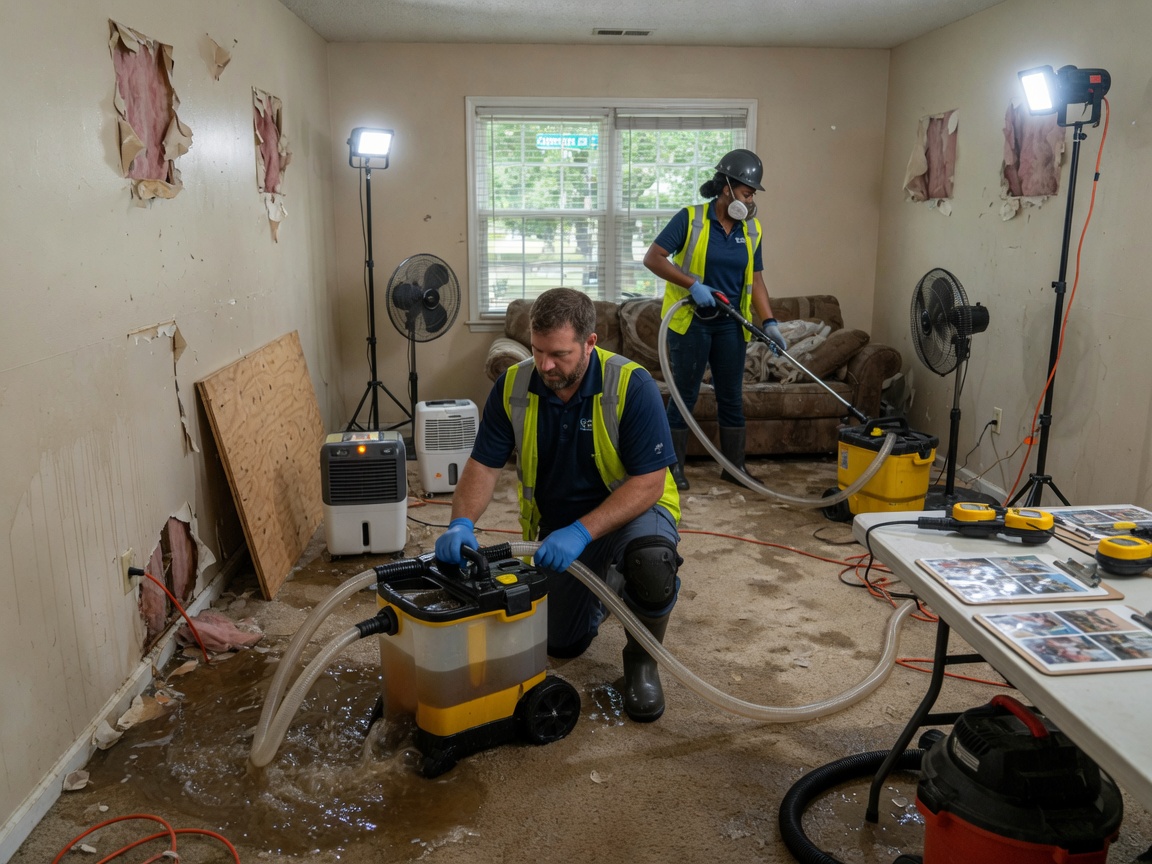
Emergency water extraction is the first hour of the job, and it is the hour that decides how much of the house you keep. Truck-mounted or portable extraction pulls free water off hardwood, vinyl, tile, and carpet. Then we deal with what soaked in: the pad, the tack strip, and the gap under the baseboard.
In a Triangle house the water may also be under the floor in the crawl. We check there even when the call started as a wet kitchen. Crawl space water removal under the house is often the second half of the same visit. Leaving the crawl wet while the kitchen looks dry is how you get cupped floors a month later.
The source might be a frozen pipe that split, a water heater, a washing machine, or storm water. Extraction looks similar. Drying does not. After free water is gone we move into load-sized structural drying rather than packing up when the floor looks dry.
If the pipe is still open, shut the water first. Household box fans push wet air into dry rooms. How long crawl spaces take to dry is why we care about the first hour under the house as much as the first hour on the finished floor.
Technician insight
The pad tells you more than the carpet face. A surface meter can read almost dry while the pad underneath is still a sponge, which is why we lift a corner before we call a room extracted.
Emergency Water Extraction Services We Offer
✓Standing Water Extraction
Free water pulled from tile, vinyl, hardwood, carpet, and basement slabs.
✓Carpet Pad Pull
Pad removed when it has held water, with the carpet floated when it can be saved.
✓Under-Cabinet Extraction
Kick spaces at kitchens and vanities opened, the spot surface extraction misses.
Pricing
Priced by affected area, water category, and drying days. You get the number in writing before equipment is set.