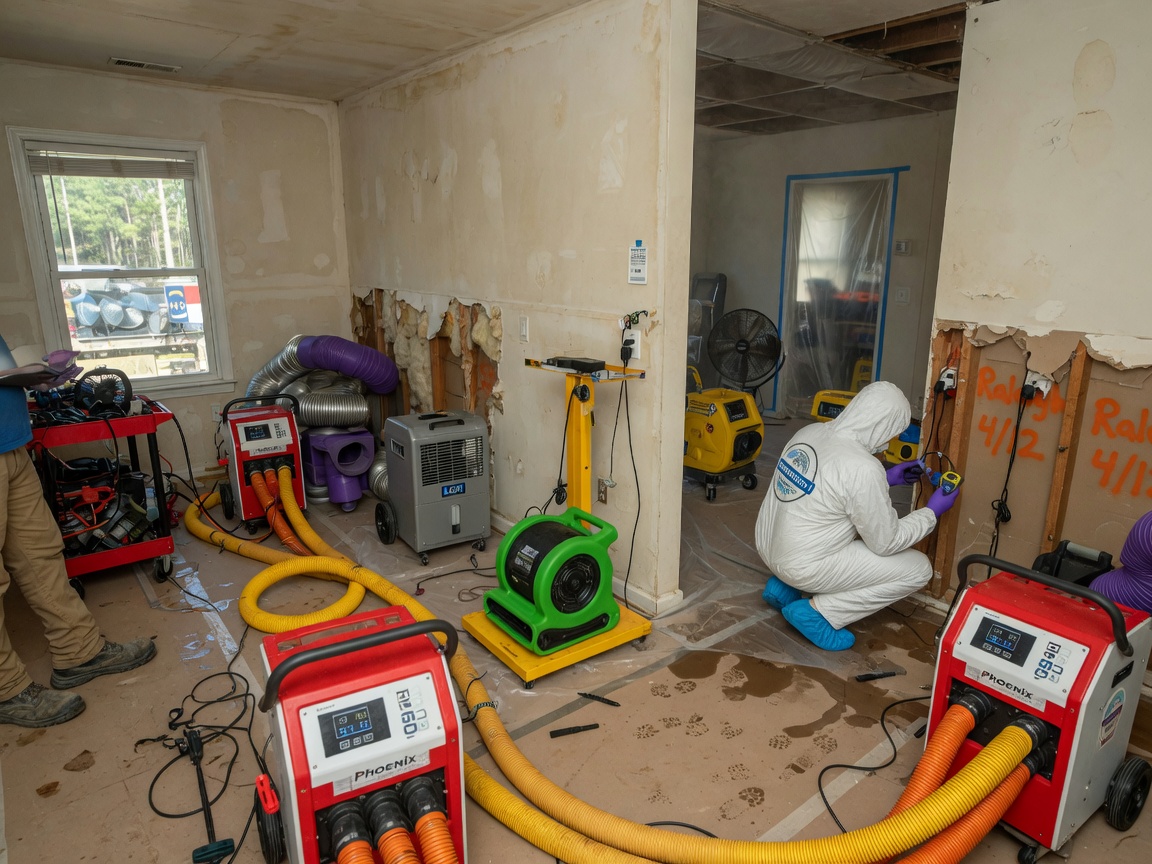
Extraction removes free water. Drying removes what is in the gypsum, the base plate, the joists, and the underside of the floor. In dry climates you can sometimes get away with air movers alone. In a humid Piedmont summer you cannot. Outdoor air is already holding moisture, so fans without enough dehumidification just redistribute it.
We size dehumidifiers in pints per day against the class of water, the cubic footage, and the outdoor conditions. Air movers go on the wet surfaces, not in a circle for show. Extraction that happens before any drying is what makes those calculations honest. You cannot dry a puddle.
Crawl spaces need their own plan. A dehumidifier in the living room does not dry wet joists under the floor. Crawl space drying after water removal often means equipment under the house, a sealed or managed vapor barrier, and readings on the wood, not only on the carpet above.
How long water damage takes to dry in a crawl space is the longer answer. Equipment leaves when the numbers hit dry standard for that material.
Technician insight
If the dehumidifier drain is kinked in the crawl and the air movers are still running, you are heating wet air. We check the drain on every visit. A clogged condensate hose will stall a whole bay.
Structural Drying and Dehumidification Services We Offer
✓Living-Space Drying
Gypsum, base plates, and floor systems in finished rooms.
✓Crawl Space Drying
Joists, sill, and band board dried with equipment placed under the house.
✓Basement Drying
Lower-level walls and slabs dried as a closed, cool volume.
Pricing
Priced by affected area, water category, and drying days. You get the number in writing before equipment is set.